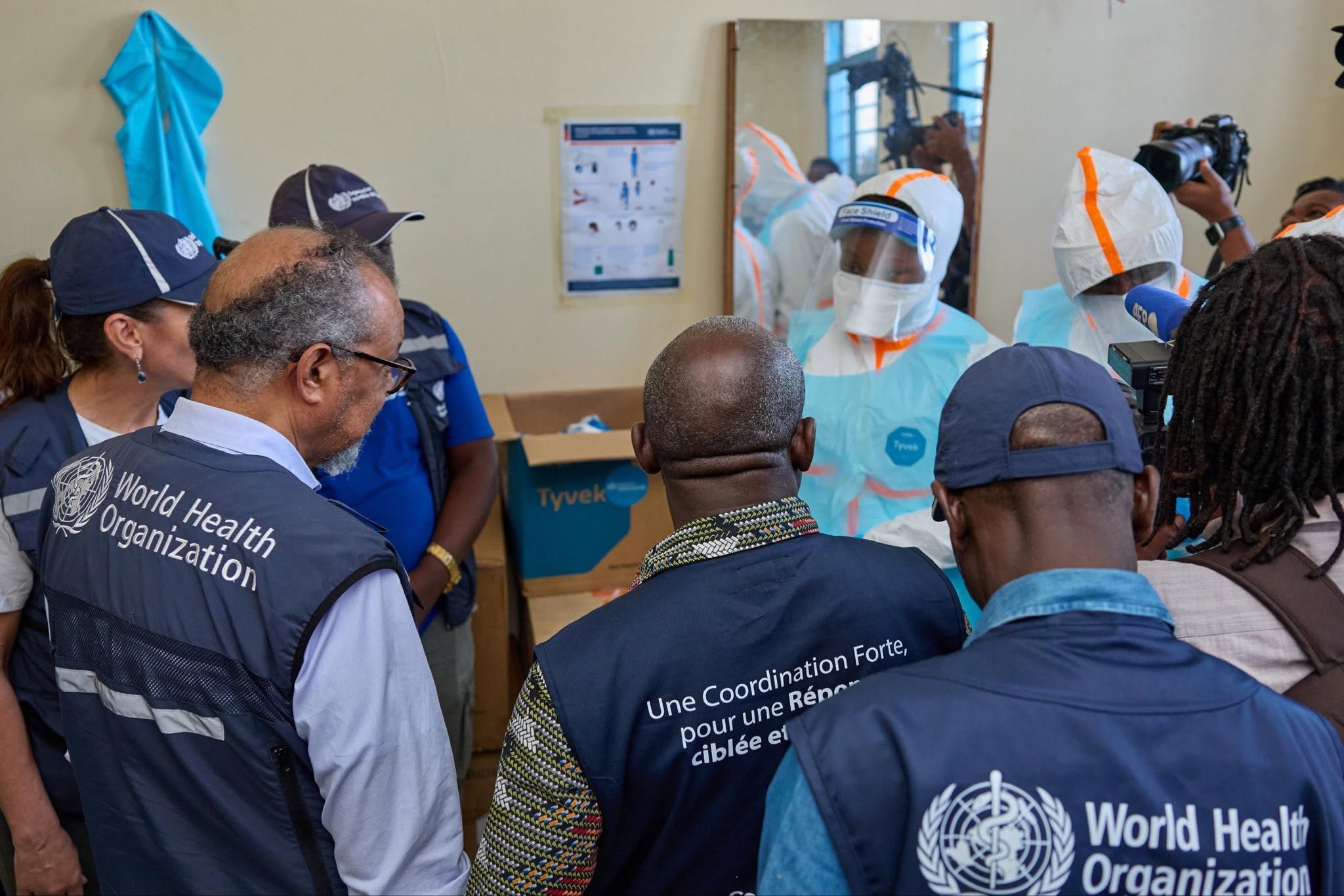
The World Health Organization (WHO) has ramped up efforts aimed at containing the impact of the Ebola outbreak in DR Congo. The three-month intervention measures intend to increase capacity for surveillance, contact tracing, and treatment.
According to WHO Director-General Tedros Adhanom Ghebreyesus, contact tracing is a major operational challenge towards bringing the transmission of the Ebola scourge under control.
The WHO Director-General noted that the organization is working towards tripling Ebola treatment capacity to 3,000. Tedros further said that WHO intends to increase the capacity for monitored contacts from the current 80% to 95%.
WHO Head of Emergency Response Abdirahman Mahamud said that implementing the measures across regions in DR Congo that have recorded a surge in the number of Ebola cases could drastically reverse the trajectory to lower levels within a short period.
While the measures outlined by WHO aim to contain the spread of Ebola in DR Congo, the organization has emphasized that epidemiological monitoring and consistent surveillance mechanisms should be sustained to avoid a resurgence.
WHO declared the Ebola scourge a Public Health Emergency of International Concern in May 2026 following an explosion of Ebola cases in DR Congo’s northeastern province of Ituri. The outbreak has so far posed a serious health threat to both healthcare personnel and residents across affected areas in DR Congo.
For decades, the Ebola virus has been a major health threat not only in DR Congo but also in other parts of Africa, including Uganda. While health experts report that treatments and vaccines are available for common Ebola strains like Zaire ebolavirus, existing treatments and vaccines may not work for certain strains of Ebola. This is because the virus exists in different species, meaning medical treatment and prevention options are heavily dependent on the type of strain.
According to the World Health Organization (WHO), Ebola species such as Bundibugyo and Sudan viruses cannot currently be protected against through existing vaccines.
The Ebola virus is mainly spread through contact with contaminated objects, surfaces, or infected body fluids. WHO notes that the virus can be found in saliva, urine, semen, sweat, stool, vomit, and blood, and can also be spread through breast milk from a deceased or infected person.
Further exposure to medical equipment used in handling Ebola patients, as well as contaminated bedding, clothing, and other infected materials, presents a risk of contracting the Ebola virus.
As clinical trials for vaccines that can protect against new Ebola virus strains are still underway, the question remains how soon such vaccines can be made available to curb the serious health threat posed to populations around the world.



Leave a Reply