
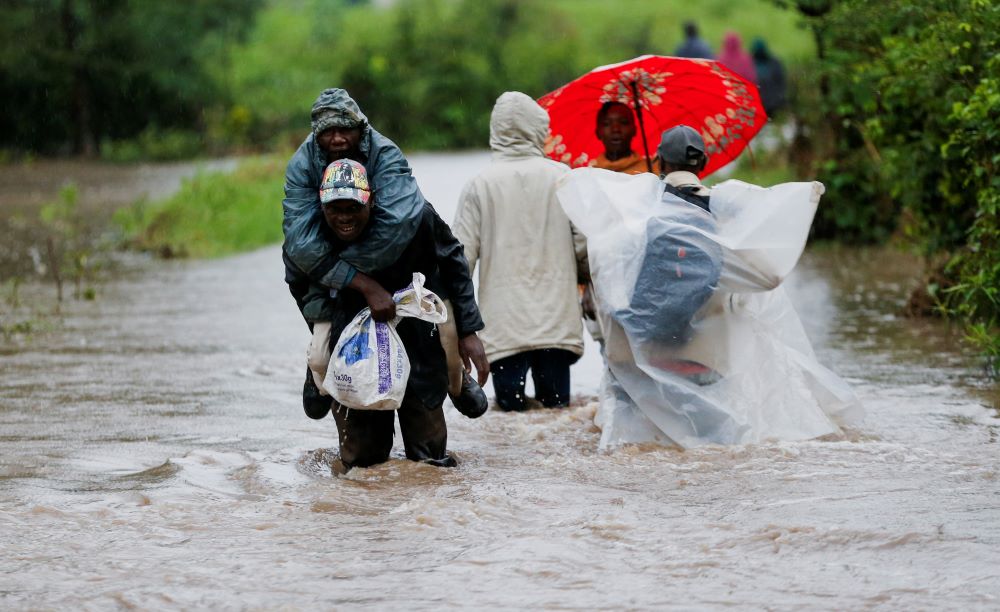
Several areas of Nairobi, the capital of Kenya, experienced serious flooding on Friday evening after heavy rains poured across the city.
The rain caused major problems on many roads. Water quickly built up in low-lying areas, making some roads difficult or impossible to use. Traffic slowed down and public transport across the city was heavily disrupted.
Many public service vehicles could not reach their usual routes because of the rising water levels. Commuters were forced to wait for hours while drivers tried to move through flooded streets. In some places, the water reached knee level, making it hard for people to walk safely.
Earlier in the day, the Kenya Meteorological Department warned residents that heavy rains were expected to increase in early March. The agency also warned about flash floods, slippery roads, poor visibility, and rising river levels.
Officials advised people not to walk or drive through flooded roads and to stay away from trees and open spaces during thunderstorms.

The flooding has also raised new concerns about Nairobi’s drainage system. Many residents say blocked drains and poor stormwater management are making flooding worse in the city.
Some of the worst affected areas included Kenyatta Avenue in the central business district, Kirinyaga Road, South C, Thika Road, Uhuru Highway, Mombasa Road, Ngong Road, Westlands, Parklands, and Mbagathi Way. In these areas, water levels rose quickly, making it difficult for both drivers and pedestrians to move around.




Leave a Reply